
Are Tech Stocks Still a Good Buy — Or Have You Already Missed It?

Most investors are asking the wrong question. Here’s the one that actually matters.
If you’ve been watching tech stocks climb and wondering whether you’ve left it too late — you’re not alone.
It’s one of the most common questions I hear right now.
“Should I still be buying? Or am I about to walk into a trap?“
And honestly? It’s a fair question. Because on the surface, the numbers look stretched. The NASDAQ has had a serious run. AI stocks have gone parabolic in places. And anyone who remembers 2022 knows exactly how fast a crowded trade can unwind.
So the hesitation makes sense.
But here’s the thing — the question most investors are asking isn’t quite the right one.
“Are tech stocks still a good buy?” treats this like a stock-picking problem.
It isn’t.
The Real Question Isn’t About Tech Stocks. It’s About Conditions.
Let me explain what I mean.
Whether tech stocks go up or down in any given period has very little to do with the companies themselves. Their products, their earnings, their CEO — these things matter — but they’re not what moves the needle.
What actually drives tech stock performance — the thing that explains the vast majority of the movement — is something most retail investors never look at.
It’s liquidity.
Global liquidity. The total supply of money flowing through the financial system.
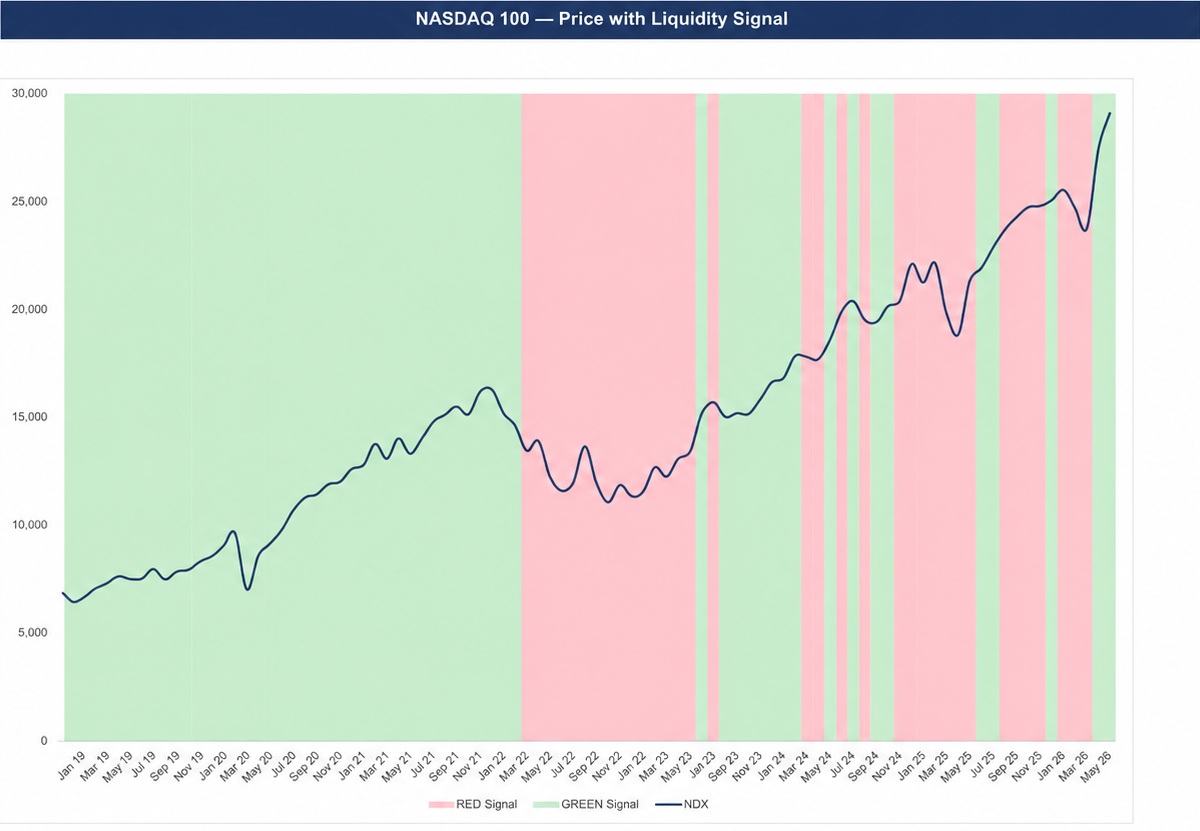
When liquidity is expanding, risk assets — particularly technology stocks — tend to rise. When it contracts, they tend to fall. Not sometimes. Consistently. Across market cycles. Across decades.
You see, this isn’t a theory. It’s one of the most well-documented relationships in modern markets. Serious macro analysts have been tracking it for years. The numbers are striking — global liquidity conditions account for the overwhelming majority of NASDAQ variability when you look at the historical record.
There’s a free resource that maps exactly how this has played out across technology markets since 2018 — every major surge, every drawdown, every recovery, tracked against global liquidity conditions. If you want to see the pattern before reading any further, you can get it here.
Most retail investors are staring at price charts, analyst ratings, and quarterly earnings reports.
The professionals are watching something else entirely.
Why “Valuation” Arguments Keep Getting It Wrong
Here’s something worth paying attention to.
Smart people have been calling tech stocks overvalued for years. Some of them have been saying it since 2020. And yet the index kept climbing.
Why?
Because valuation is not the primary driver of tech stock performance. Liquidity is.
When money is flowing freely through the financial system, it has to go somewhere. And it tends to find the highest-growth, most liquid assets available. That means technology. That means AI. That means the NASDAQ.
See the Pattern Behind the Biggest Moves in Tech
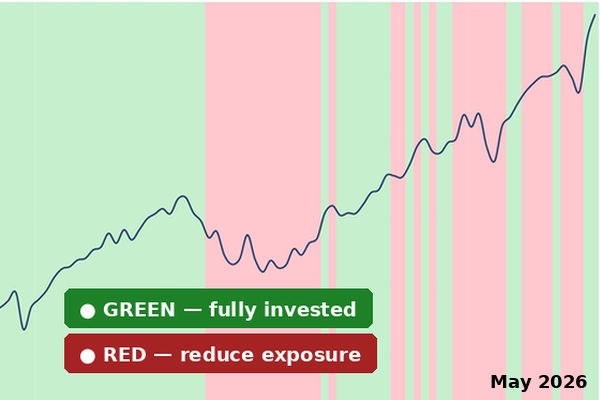
The Liquidity Map shows how global liquidity conditions have tracked against technology market performance since 2018 — the surges, the drawdowns, and the recoveries. Every major phase, laid out clearly in one place.
Free. About ten minutes to read.
When that flow reverses — when central banks tighten, when liquidity contracts — even fairly-valued stocks get sold.
This is why trying to answer “are tech stocks still a good buy?” by looking at P/E ratios or analyst price targets will leave you frustrated. You’re looking at the wrong data.
What You Actually Need to Know Before Making a Decision
So if liquidity is the governing variable, what does that tell us practically?
Here are three things worth understanding before you make any decision about your tech exposure right now.
1. Direction matters more than level.
It’s not about whether liquidity is “high” or “low” in absolute terms. It’s about whether it’s expanding or contracting relative to where it was. A market with less liquidity than peak 2021 can still be a strong environment for tech stocks — if liquidity is growing from its current base.
That directional shift is what moves markets.
2. The macro environment changes slowly — until it doesn’t.
Liquidity conditions tend to move gradually. Central bank policy, money supply growth, government balance sheet dynamics — these are slow-moving forces. Which means there are extended periods where the environment is clearly favourable, and extended periods where it clearly isn’t.
The challenge is knowing which one you’re in right now.
3. Timing your entry based on headlines will cost you.
Every major market move — up or down — is accompanied by convincing narratives. In 2022, the narrative was “rates are going up, tech is finished.” In 2023, it was “the AI rally is just hype.” Neither told you what actually mattered.
You can read more about this in What Actually Drives Technology Markets
The investors who got it right weren’t reading the headlines more carefully. They were tracking a different set of variables altogether.
So — Are Tech Stocks Still a Good Buy?
Here’s the honest answer.
The question isn’t unanswerable. But it can’t be answered by looking at the stocks themselves.
It requires understanding the macro environment — specifically, the liquidity conditions that drive the performance of risk assets. And that requires a framework. Not tips. Not analyst opinions. A systematic way of reading the conditions and knowing what they mean for your positioning.
That framework exists. It’s been used by professional macro investors for years. And the historical record of applying it to technology markets is, to put it plainly, compelling.
But building that framework yourself — pulling the right data sources, applying the right methodology, tracking the right variables on the right timeframe — takes time and expertise most investors simply don’t have.
If You Want a Head Start
If this framework makes sense to you, the next step is seeing it applied to the full historical record.
The Liquidity Map shows exactly how global liquidity conditions have tracked against technology market performance since 2018. Every major phase — the 2020 surge, the 2022 contraction, the AI-driven recovery — laid out clearly in one place.
Free. No economics background required.